
Tanker Truck Accident Settlement: Why Cargo Changes Everything
Tanker trucks carry liquids, gas, and hazmat — which means higher federal insurance minimums ($1M–$5M) and catastrophic injuries that reshape settlements.
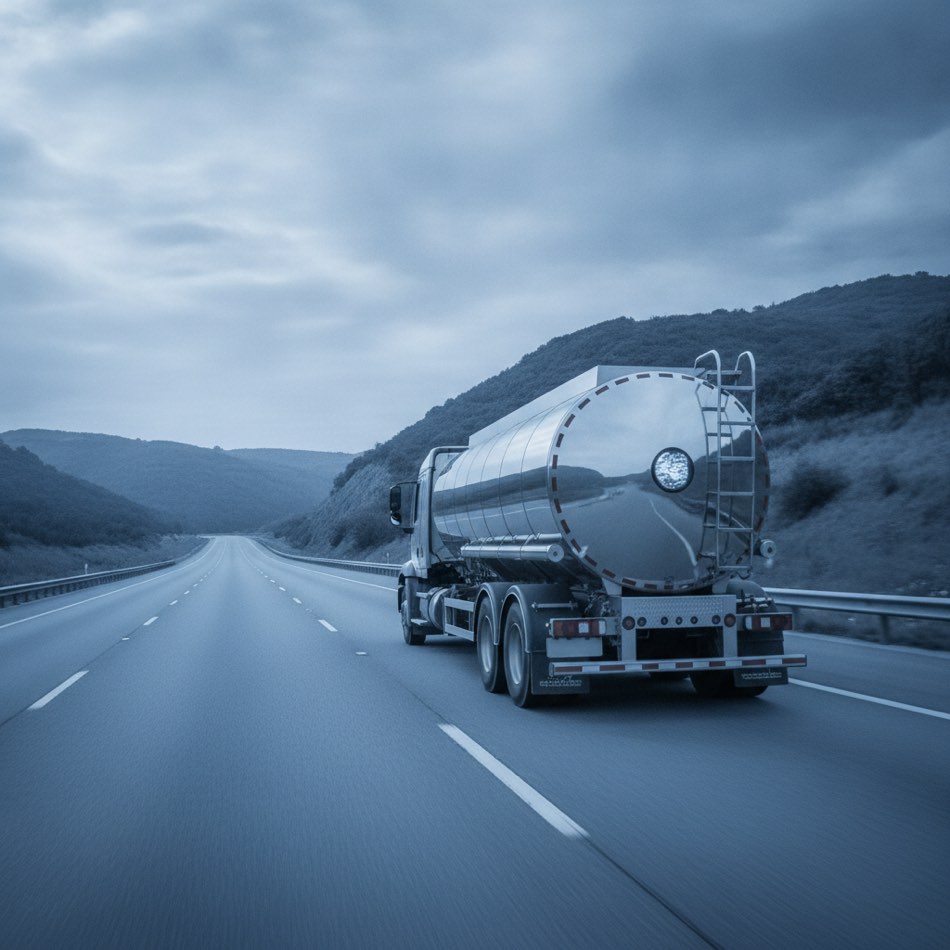
A tanker truck accident settlement rarely looks like a standard truck crash settlement — and the reason is the cargo. Tankers haul liquids, compressed gas, fuel, and hazardous materials, and that single fact pushes up the insurance available, multiplies the ways people get hurt, and adds defendants you wouldn’t see in an ordinary collision. This guide explains how cargo type, federal insurance floors, and “liquid surge” physics shape what these cases are actually worth.
This article is for people trying to understand how a tanker crash differs from a typical truck accident. It is educational, not legal advice — for your specific case, talk to a licensed attorney in your state.
Why tanker settlements work differently — the short answer
Tanker truck accidents tend to involve larger settlements because federal law forces tankers to carry more insurance ($1 million to $5 million versus the $750,000 general minimum) and because hazmat cargo causes catastrophic injuries — burns, explosions, toxic exposure — that drive damages far higher than an ordinary crash. The cargo, not just the truck, sets the ceiling.
The insurance floor: what the cargo requires
The single biggest reason tanker settlements differ is the federally mandated insurance minimum. Under 49 CFR §387.9, the Federal Motor Carrier Safety Administration (FMCSA) sets minimum “financial responsibility” levels by what the truck is hauling — and tankers almost always fall into a higher tier than the $750,000 floor that applies to ordinary freight.
| Cargo type (vehicle 10,001+ lbs) | Federal minimum insurance |
|---|---|
| Non-hazardous property (general freight) | $750,000 |
| Oil; hazardous waste, materials, or substances (general) | $1,000,000 |
| Bulk Division 1.1/1.2/1.3 explosives; bulk gases (Div. 2.1/2.2); certain Hazard Zone A materials | $5,000,000 |
Source: 49 CFR §387.9, FMCSA minimum levels of financial responsibility.
Why this matters for a settlement: insurance coverage is often the practical ceiling on what an injured person can actually recover. A standard freight truck may carry only $750,000 in coverage, but a fuel or chemical tanker is legally required to carry $1 million, and a high-risk hazmat or gas tanker up to $5 million — a much larger pool to compensate serious injuries. That higher floor is exactly why tanker cases can resolve for more than a comparable dry-van crash. For background on how these policies are layered, see our explainer on commercial truck insurance.
Liquid surge: the physics that make tankers dangerous
A tanker doesn’t behave like a loaded box trailer. When a tank is only partially filled, the liquid inside is free to move — and it does. Under braking, turning, or a lane change, that mass of liquid sloshes forward, backward, or side to side. This is called liquid surge, and it’s a well-documented hazard in commercial driving.
The consequences are predictable and severe:
- Rollovers. Surge can shift the truck’s center of gravity mid-maneuver and tip the tanker, even at moderate speeds.
- Jackknifes. A surge of liquid pushing forward during braking can shove the trailer out of line with the cab.
- Longer stopping distances. A surging load can push the truck through an intersection the driver thought they could stop short of.
In a settlement, liquid surge often points straight to driver-training and loading questions: Was the driver trained for surge? Was the tank loaded to a safe level? Smooth, gradual braking and proper baffling matter, and failures here can establish the carrier’s liability. If the crash also involved a logged hours-of-service or maintenance failure, that compounds the case — see FMCSA violations in truck accidents.
Hazmat exposure: how it multiplies damages
When the cargo is hazardous, a crash stops being just a collision. The same wreck can produce:
- Fire and explosion from fuel or flammable gas, causing severe burns.
- Chemical burns and toxic exposure from corrosives or toxic liquids.
- Inhalation injuries from released gases or vapors.
- Evacuations and environmental contamination affecting bystanders, homes, and businesses far from the point of impact.
These are catastrophic-injury categories. Severe burns alone can mean months of hospitalization, multiple surgeries, skin grafts, permanent scarring, and lifelong pain — the kind of harm that produces very high medical bills and very high pain-and-suffering components. Because damages in a settlement are built from medical costs, lost earning capacity, and pain and suffering, a hazmat injury naturally pushes the number up. For how those components combine in any truck case, see the average truck accident settlement.
More defendants: who can be on the hook
An ordinary crash usually involves the driver and the trucking company. A tanker hazmat case can pull in a wider circle of responsible parties, and more defendants generally means more available insurance:
- The driver — for negligent operation, including failure to manage surge.
- The motor carrier — for hiring, training, supervision, and maintenance.
- The shipper — the company whose hazardous product was being hauled, if it mislabeled, misclassified, or failed to disclose the material’s hazards.
- The loader — whoever filled the tank, if improper loading (wrong level, wrong product, surge risk) contributed.
- The tank or equipment manufacturer — if a defective valve, baffle, or tank shell failed.
Hazardous materials are tightly regulated, from labeling to loading to placarding. When one of those steps fails and contributes to the harm, the party responsible for that step can become a defendant. Sorting out who did what is one reason tanker cases take longer and involve more investigation than a typical crash.
Estimate your settlement range
Before getting deep into defendants and coverage tiers, it helps to know the ballpark you’re working with. Our free truck accident settlement calculator gives a state-specific estimate in about 60 seconds — no email required — covering the medical, lost-income, and pain-and-suffering pieces that drive most of the value. Settlement amounts also depend heavily on your state’s laws, so check your state’s truck accident rules too.
Frequently asked questions
Are tanker truck accident settlements larger than other truck settlements?
Often, yes — for two reasons. Tankers are legally required to carry more insurance ($1 million to $5 million versus the $750,000 general minimum under 49 CFR §387.9), and hazmat injuries like burns and toxic exposure tend to be catastrophic, which raises medical and pain-and-suffering damages. There’s no guaranteed figure, though; every case turns on its own facts.
How much insurance does a tanker truck carry?
It depends on the cargo. A tanker hauling oil or general hazardous materials must carry at least $1 million; one hauling high-risk explosives, certain gases, or specific Hazard Zone A materials in bulk must carry up to $5 million, under 49 CFR §387.9. Non-hazardous freight trucks only need $750,000.
What is liquid surge in a tanker accident?
Liquid surge is the movement of liquid inside a partially filled tank when the truck brakes, turns, or changes lanes. That shifting mass can cause rollovers, jackknifes, and longer stopping distances. It frequently points to driver-training and loading issues when establishing liability.
Who can be sued in a tanker truck accident?
Potentially the driver, the trucking company, the shipper whose product was hauled, the company that loaded the tank, and the equipment manufacturer — depending on what failed. Hazmat cases often involve more defendants than an ordinary crash because loading, labeling, and handling are separately regulated steps.
Why does hazmat cargo increase a settlement?
Hazardous cargo can cause fires, explosions, chemical burns, toxic exposure, and evacuations — catastrophic injuries with high medical costs and severe, lasting pain and suffering. Because settlements are built from those damage categories, more severe injuries generally produce higher settlements, and the higher insurance floor makes larger recoveries possible.
The bottom line
A tanker truck accident settlement is shaped by the cargo more than the collision. The federally required insurance floor jumps from $750,000 to $1 million or $5 million depending on what’s in the tank, liquid-surge physics create distinct liability questions, and hazmat exposure produces catastrophic injuries that push damages — and the number of defendants — well beyond an ordinary crash. To see where your case might land, start with the free settlement calculator.
This article is for educational purposes only and is not legal advice. Insurance requirements, liability, and settlement outcomes depend on the specific facts of your case and the laws of your state. Consult a licensed attorney in your state.