
Dump Truck Accident Settlements: The Insurance Trap Nobody Mentions
Dump trucks crash differently than semis, and the $750K federal insurance floor often doesn't apply in-state. Verified cases, deadlines, and claim value.
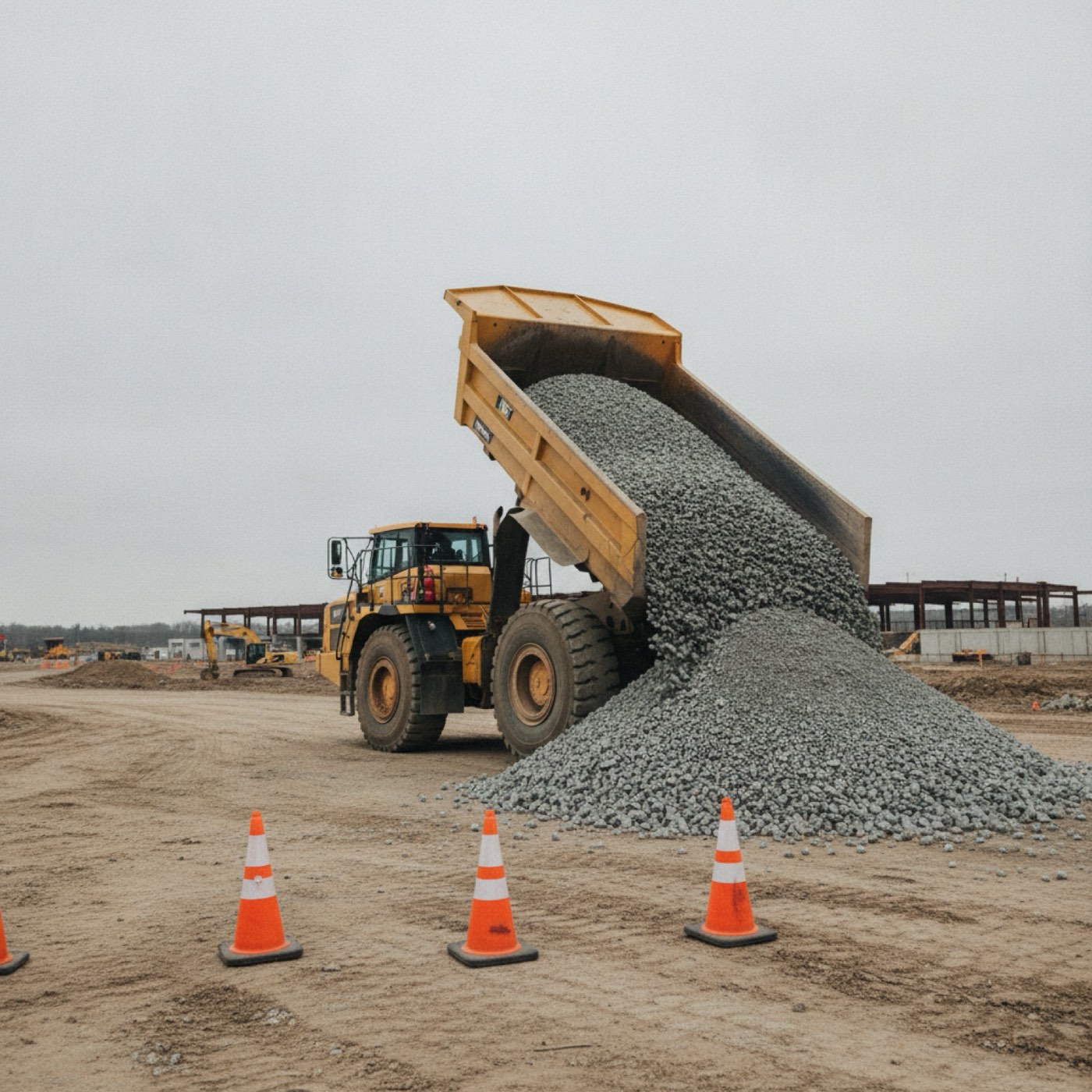
Dump truck cases hide two surprises. The first is insurance: the $750,000 federal minimum most people associate with trucks only applies to interstate operation, and most dump trucks never leave their state — so the available coverage may be set by state law or a construction contract instead. The second is the defendant: if the truck belonged to a city or county, your deadline to act may be measured in weeks, not years.
This guide covers how dump truck crashes differ from semi-truck crashes, the verified settlements and verdicts we could confirm at the source, who is typically liable, and the deadlines that quietly kill these cases.
Dump trucks crash differently than semis
A tractor-trailer’s dangers concentrate on the highway. A dump truck’s concentrate around the job site and the short, repetitive routes between pit and site. Federal data compiled by the Kentucky Injury Prevention and Research Center shows an average of 340 fatal crashes involving dump trucks per year (2011–2016, FMCSA data), and NIOSH counted more than 800 construction and extraction workers killed in dump truck incidents from 2011 to 2020 — many of them struck-by and backing deaths at worksites rather than road crashes.
The vehicle itself explains the pattern:
| Dump truck trait | The accident it causes |
|---|---|
| High center of gravity, load that can shift or stick to one side | Rollovers and tip-overs, especially on uneven ground — KIPRC calls rollover frequency “high” |
| Raised bed | Striking overpasses and power lines; in one 2024 Florida case a raised bed hit an I-10 overpass, injuring the driver and showering debris on a trailing pickup |
| Bed blocks all rear visibility | Backing deaths; NIOSH’s 2023 guidance tells employers to minimize backing with staging areas and spotters |
| Open loads of gravel, sand, and demolition debris | Road-debris crashes — AAA found more than 200,000 debris-related crashes over 2011–2014, about two-thirds caused by items falling off vehicles, per the AAA Foundation |
| Heavy loads on local roads and grades | Brake failure on hills; the largest verified verdict below was a runaway dump truck with failed brakes |
A 2013 FMCSA study also found dump truck drivers had the lowest seat belt use of any commercial vehicle type (70%), which tells you something about the safety culture in parts of this industry.
The insurance reality: the federal floor may not apply
For interstate for-hire carriers, federal rule 49 CFR § 387.9 requires at least $750,000 in liability coverage. But that schedule applies to carriage “in interstate or foreign commerce.” A dump truck hauling aggregate from a local pit to a local site, entirely within one state, is generally governed by state minimums — which can be far lower. Texas, for example, requires a $500,000 combined single limit for intrastate commercial trucks.
Three practical consequences for your claim:
- Find out early who insures the truck and for how much. With a small owner-operator, a low intrastate policy can cap recovery regardless of what the case is worth. Our guide to uninsured and underinsured truck accidents covers what happens when the policy is too small.
- Look for the contract. Construction bid packets commonly require $1 million in coverage even where the legal minimum is lower, and general contractors often carry additional liability. The project’s paper trail can add defendants and coverage the police report never mentions.
- Liability rarely stops at the driver. The hauling company (training, qualification, maintenance), the construction company controlling the site, a parts manufacturer in a brake-failure case, and sometimes the loading operation are all candidates. This is standard commercial truck liability analysis, applied to a messier cast of characters.
Verified settlements and verdicts
Dollar figures on law-firm marketing pages are frequently unverifiable. The cases below were confirmed at the cited source; they show the realistic range when injuries are serious.
- $10.1 million verdict — Pennsylvania. A dump truck with failed brakes ran away downhill at more than 45 mph and struck the plaintiff’s vehicle, causing leg, ankle, and back fractures. The jury found the driver and the construction company that owned the truck negligent — no proper certification, skipped safety inspections — and the award (including about $1 million punitive) survived appeal.
- $8.5 million settlement — Minnesota, reported 2025. A 61-year-old construction worker was struck and killed by a dump truck at a downtown St. Paul worksite. The family’s suit against the driver and Ti-Zack Concrete alleged a post-crash drug test came back presumptively positive for cocaine and THC, along with destroyed evidence and inadequate training.
- $1.475 million settlement — New Jersey. A head-on collision with a dump truck working a paving job left a 47-year-old with pelvic fractures, a broken wrist, broken leg bones, a collapsed lung, and nerve damage requiring multiple surgeries.
- $1.75 million settlement — California. A dump truck driver was killed by his own truck, left in gear, in a case his employer’s side denied until two weeks before trial.
Worksite deaths, brake failures, and head-on collisions with serious orthopedic injuries dominate the list, and the settlements track injury severity the same way other truck cases do — see how truck settlements are calculated for the underlying math.
If it was a city or county dump truck, move immediately
Municipalities run large dump truck fleets for public works and snow removal, and claims against them follow special rules with brutally short deadlines:
- New York: a notice of claim against a public corporation must be served within 90 days (General Municipal Law § 50-e).
- California: a written claim must be presented to the government entity within 6 months under the Government Claims Act before you can sue.
- Most other states have similar notice-of-claim statutes, and some city charters set even shorter windows. These deadlines run alongside — and much faster than — the ordinary statute of limitations.
Miss the notice deadline and the claim usually dies, no matter how strong the facts are. A crash with any government vehicle is the clearest situation where waiting to “see how the injury develops” is a mistake.
What a dump truck claim is worth
The valuation method is the same multiplier framework used across truck cases: economic damages, a pain-and-suffering multiplier keyed to injury severity, your state’s factor, minus your share of fault. The dump-truck-specific variables are the insurance ceiling discussed above and the frequent presence of multiple commercial defendants, which can raise the realistic total. Run your own numbers in our free settlement calculator — no email or phone required — and treat the result as a starting range, not a promise.
FAQ
What is the average dump truck accident settlement?
There is no reliable published average specific to dump trucks. Verified outcomes above run from about $1.5 million (serious orthopedic injuries) to $10 million (catastrophic negligence with punitive damages), while minor-injury claims settle far lower. Injury severity, provable negligence, and available insurance drive the number.
Who can I sue after a dump truck accident?
Potentially the driver, the hauling company, the construction company controlling the site, the truck or brake manufacturer, and — for public fleet trucks — the city or county, subject to notice-of-claim deadlines.
Does the $750,000 federal insurance minimum apply?
Only if the truck operates in interstate commerce. Local, in-state hauling is governed by state minimums (Texas: $500,000 for intrastate commercial trucks), though construction contracts often require $1 million regardless.
The dump truck spilled gravel that hit my car. Is that a claim?
Yes. Unsecured-load crashes are common — AAA’s road-debris research attributes about two-thirds of debris crashes to items falling from vehicles — and both the driver and the company can be liable for improper loading or a missing cover. Preserve photos of the debris and the truck if you can.
How long do I have to file?
The state personal-injury deadline (1 to 6 years depending on the state) — unless a government entity owns the truck, in which case a notice of claim may be due within 90 days to 6 months. Check your state in our 50-state deadline table.
This article is for educational purposes only and is not legal advice. Case outcomes are as reported by the cited sources; statutes and insurance minimums change. Confirm current law with a licensed attorney in your state before making case decisions.